Attention-deficit hyperactivity disorder (ADHD) affects millions of children and adults and can make it difficult to focus, stay organized, or control impulses. Although medications are available to help manage symptoms, most current treatments focus on the same brain systems that involve the chemical dopamine. Vanderbilt Kennedy Center researchers are now exploring a completely different approach that could open the door to new types of treatments.
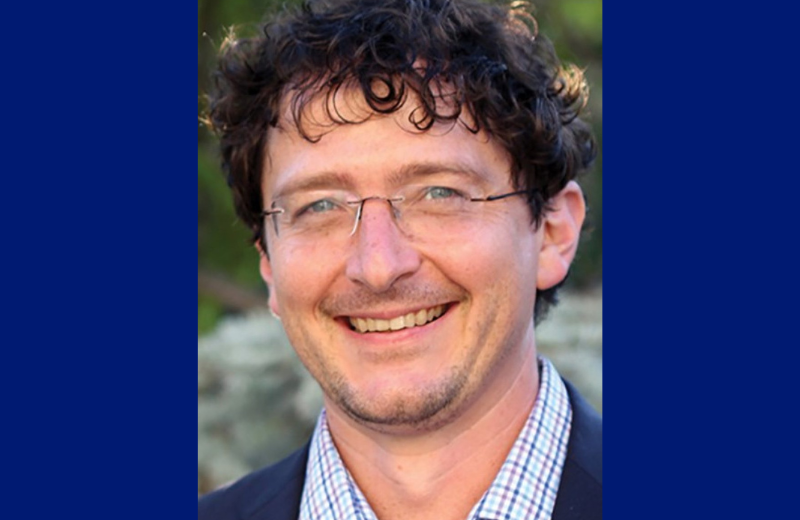
PHOTO DESCRIPTION: Headshot of VKC researcher Richard Sando, a white male with black curly hair, glasses, and a blue checked button-down with blazer.
Attention-deficit hyperactivity disorder (ADHD) affects millions of children and adults and can make it difficult to focus, stay organized, or control impulses. Although medications are available to help manage symptoms, most current treatments focus on the same brain systems that involve the chemical dopamine. Vanderbilt Kennedy Center (VKC)(TN IDDRC, UCEDD, LEND) researchers are now exploring a completely different approach that could open the door to new types of treatments.
Richard Sando, PhD, assistant professor of Pharmacology, received a VKC Nicholas Hobbs Discovery Award to study a group of brain proteins called latrophilins. These proteins belong to a larger family known as adhesion GPCRs, which help brain cells connect with each other and communicate.
The human brain contains trillions of connections between nerve cells, called synapses. These connections form complex networks that allow us to think, learn, and control behavior. For these networks to work properly, brain cells must connect to the right partners at the right time.
“Latrophilins appear to play an important role in helping these connections form correctly, said Sando. “They sit on the surface of brain cells and help guide the formation of specific synapses, helping shape how brain circuits are built. Interestingly, several genetic studies have linked differences in the genes for latrophilins to ADHD. However, we still don’t understand exactly how these proteins might contribute to the condition.”
To better understand this connection, Sando’s research is examining how latrophilins affect the formation and function of synapses in the brain. The team is using genetic techniques, brain-cell imaging, and electrical recordings to study how these proteins help build and regulate neural circuits.
“If we can better understand how latrophilins influence brain connections, it could reveal new biological pathways involved in ADHD,” said Sando. “That knowledge could eventually help us design new medications that target these pathways. This would be significant because adhesion GPCRs like latrophilins represent one of the largest groups of proteins in the brain that have not yet been targeted by existing drugs. Finding ways to influence them could create entirely new treatment strategies.”
Although the research is still in its early stages, Sando hopes it will help clarify the biological roots of ADHD and point toward new therapeutic options in the future.
Sando and colleagues have published a review that can provide an overview of the field, The expanding roles of adhesion GPCRs in neural circuit assembly.