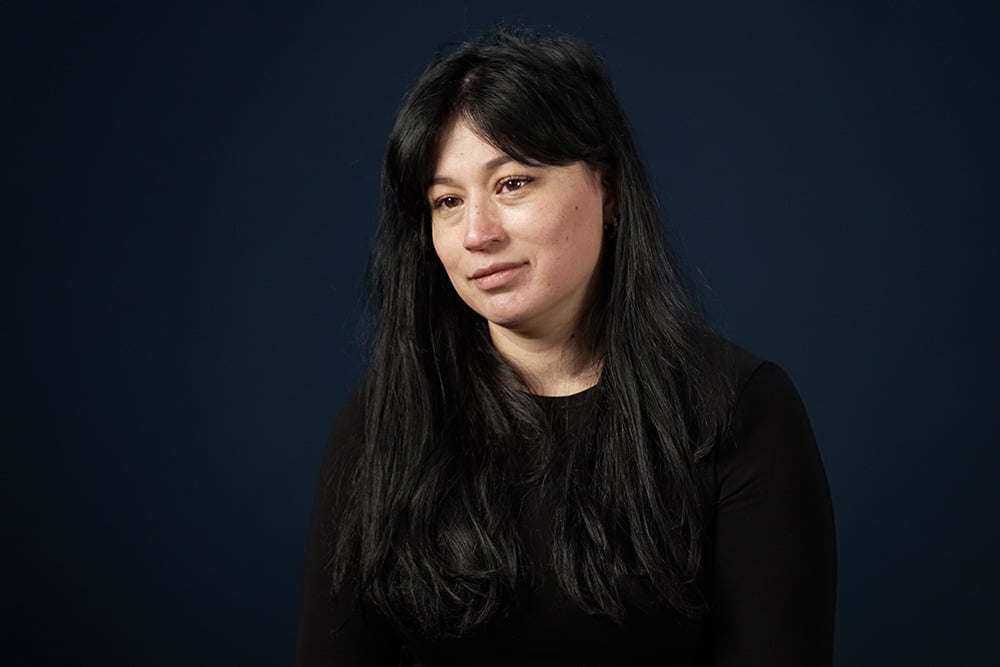
Marking the completion last spring of a master’s degree in special education and the Minnesota LEND program, Kamola Salimova (MNLEND 2024-25) was focused more on beginnings.
“I have more to do,” she said. “I’m interested in a master’s degree in public health, or further studies in the field.”
With a passion for special education and mastery of several languages, Salimova hopes to work with children with complex support needs and their families.
“When I was in seventh grade, I had a neighbor [in Uzbekistan] with Down syndrome. We didn’t have special education there at the time, and when I passed by this neighbor’s house on my walk to school, she would ask me what my school was like and what was happening. She ended up passing away at age 14.”
When Salimova came to the United States in 2008, she was struck early on when she saw a young woman with Down syndrome working as a cashier at a department store.
“This young woman was thriving and growing, and I thought, wow, what are they doing differently here? And since then, I’ve continued to be impressed with how the United States responds to disability.”
She hopes to specifically serve families with children with disabilities who have immigrated to the United States and are learning English. As a MNLEND fellow, she translated a book about early developmental milestones into Uzbek as part of the Institute on Community Integration’s Act Early project.
“Each of these children is unique, and we have to help them and their parents as they deal with all of the developmental issues, the emotional issues, and all of the paperwork,” Salimova said. “If we can do that, just think about what a large impact that would have. It makes me so grateful to be in this career.”
Faculty members for MNLEND (Minnesota Leadership Education in Neurodevelopmental Disabilities) praised Salimova’s contributions to the program.
“Kamola’s Act Early translation and outreach work strengthened our ability to reach families in culturally meaningful ways, and she approached every task with professionalism, humility, and excellence,” said Jennifer Hall-Lande, a MNLEND faculty member.
Libby Hallas (MNLEND 2017-2018), an ICI researcher who worked closely with Salimova during the fellowship, praised Salimova’s enthusiasm for the work and understanding of its importance. “Her ongoing quest to continue supporting people with disabilities and their families is inspiring and demonstrates her leadership,” Hallas said.
Given current funding uncertainties with programs like MNLEND, Salimova hopes to help support the program as she moves through her career. MNLEND is an interdisciplinary leadership training experience that spans more than 16 disciplines across the University of Minnesota.
“LEND is a powerful force in putting together students with professionals and clinicians across the disability spectrum,” she said. “It really provided a boost to my academic education because you are learning and doing, not just reading a textbook. I felt as though I had a big experience and that I’ll be able to share that with families in the future.”
View Original Article